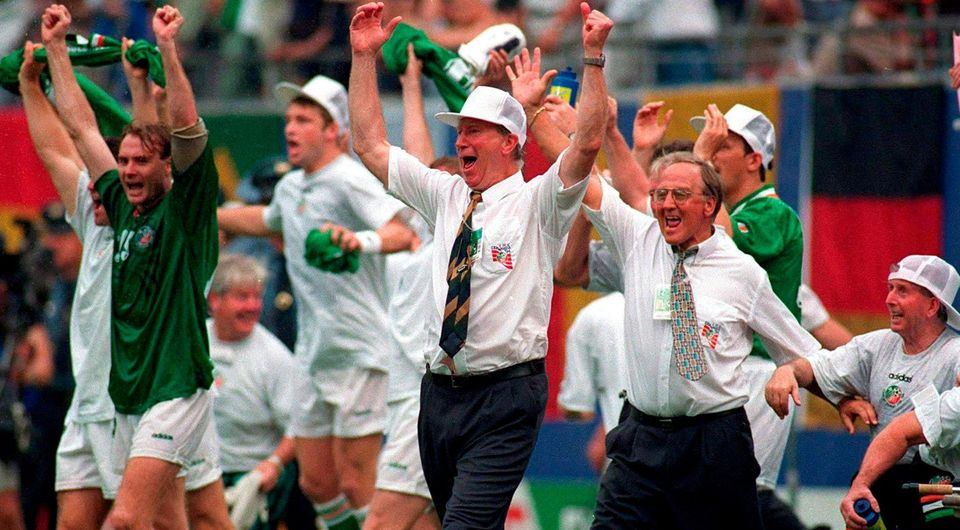
The world of football has seen many stars, but few stood as tall as the man they called “Big Jack.” Jack Charlton was not just a player; he was a force of nature who changed the game on both sides of the touchline. Whether he was towering over strikers at Elland Road or leading a green army of fans in Dublin, Jack brought a unique blend of grit and honesty to everything he did. He was a man of the people who never forgot his roots in the coal mines of Northumberland, even when he reached the very top of the sporting world.
In this article, we will take a deep dive into the incredible journey of Jack Charlton. We will look at his record-breaking years at Leeds United, his legendary partnership with his brother Bobby, and the “Put ‘Em Under Pressure” era that made him a saint in the Republic of Ireland. Jack’s story is one of hard work, simple tactics, and a heart as big as his 6-foot-3 frame. Let’s explore the life of a true giant who proved that with enough determination, anyone can conquer the world.
The Early Days in Ashington: From Mines to Grass
Before he was a global superstar, Jack Charlton was a young lad from Ashington, a tough mining town in the North East of England. Born in 1935 into a famous footballing family (his mother Cissie was a Milburn), you might think his path was set. However, Jack wasn’t always sure he wanted to play. At age 15, he followed his father down into the coal mines. It only took one day for him to realize that life underground wasn’t for him. He famously said he never wanted to go back down there again!
After a brief thought about joining the police force, he decided to give professional football a real try. He joined Leeds United in 1950, beginning a relationship that would last for over two decades. It wasn’t an easy start; Jack was often overshadowed by his more naturally gifted younger brother, Bobby. But while Bobby had the grace, Jack had the “steel.” He worked tirelessly to improve his game, turning himself into a defender that opposition forwards genuinely feared to face.
A One-Club Man: Jack Charlton and the Leeds United Legend
In a modern era where players change teams every season, Jack Charlton stands out as a rare “one-club man.” He spent his entire professional playing career at Leeds United, making a staggering 773 appearances. This record still stands today and likely always will. Under the legendary manager Don Revie, Jack became the cornerstone of a Leeds defense that was famous for being “uncompromising.” He wasn’t just a tackler; he was a leader who organized the backline with military precision.
During his time at Elland Road, Jack helped transform Leeds from a struggling side into one of the best teams in Europe. He won the First Division title, the FA Cup, and two Inter-Cities Fairs Cups. He was so influential that in 1967, he was named the FWA Footballer of the Year—an honor his brother Bobby had won just a year earlier. Jack’s loyalty to the club and his fierce work ethic made him an absolute hero to the Leeds faithful, who saw him as the heartbeat of their golden era.
Winning the World Cup: 1966 and National Glory
The year 1966 is etched into the heart of every English football fan, and Jack Charlton was a massive part of that history. At age 30, many thought he was too old for an international debut, but Alf Ramsey knew better. He needed a “stopper” to play alongside the elegant Bobby Moore. Jack was the perfect fit. He played every single minute of the tournament, providing the physical presence and aerial dominance that allowed the rest of the team to shine.
The final against West Germany at Wembley remains the greatest moment in English sports. When the final whistle blew, an iconic image was captured: Jack sinking to his knees in exhaustion and relief, before embracing his brother Bobby. They became only the second pair of brothers to win a World Cup together. For Jack, it was the ultimate validation. He had gone from being the “other” Charlton to a world champion in his own right, forever securing his place in the history books.
Key Statistics and Achievements of Jack Charlton
| Category | Details |
| Full Name | John “Jack” Charlton OBE |
| Date of Birth | May 8, 1935 |
| Club Career | Leeds United (1950–1973) |
| Total Leeds Apps | 773 (Club Record) |
| England Caps | 35 Appearances (6 Goals) |
| Major Honours | World Cup (1966), First Division (1969), FA Cup (1972) |
| Managerial Success | Republic of Ireland (1986–1996), Middlesbrough |
| Award | FWA Footballer of the Year (1967) |
Transition to Management: Finding a New Calling
When Jack hung up his boots in 1973, he didn’t stay away from the game for long. He moved straight into management with Middlesbrough, and the impact was instant. He led them to the Second Division title in his very first season and was named Manager of the Year. Jack had a very specific way of playing—direct, physical, and highly organized. He didn’t believe in overcomplicating things; he wanted his teams to play to their strengths and “put ’em under pressure.”
He later had successful spells at Sheffield Wednesday and a shorter, more difficult time at Newcastle United. However, it was during these years that Jack honed his “Long Ball” philosophy. He understood that you didn’t need the most expensive players to win; you needed a group of men who knew their jobs and worked for each other. This practical, no-nonsense approach would eventually lead him to his most famous role, where he would change an entire nation’s sporting identity.
The Irish Revolution: Becoming “Saint Jack”
In 1986, Jack Charlton took the job as the manager of the Republic of Ireland. At the time, Irish football was in a bit of a slump. Jack changed everything. He began searching for players with Irish heritage—the famous “granny rule”—bringing in stars like Ray Houghton and John Aldridge. He taught the team to play a high-pressing, direct game that caught the big nations off guard. Suddenly, Ireland wasn’t just participating; they were winning.
His ten years in charge are known as the greatest era in Irish football history. He led the team to their first major tournament at Euro ’88, where they famously beat England 1-0. Then came the magic of Italia ’90, where Ireland reached the quarter-finals, and USA ’94, where they beat Italy in New York. Jack became more than a manager; he was a national hero. He was granted honorary Irish citizenship and was loved for his habit of sharing a pint and a story with the fans.
Tactical Genius: The “Put ‘Em Under Pressure” Philosophy
Jack’s tactics were often criticized by purists who preferred a “pretty” passing game, but he didn’t care. His philosophy was simple: if the ball is in the opponent’s half, they can’t score. He wanted his goalkeepers to kick long and his defenders to never take risks. Jack Charlton believed in “standardizing” every player’s role so there was no confusion on the pitch. This clarity gave his players immense confidence, allowing them to punch far above their weight.
He was also a pioneer in areas people often forget. He was one of the first to use “zonal marking” effectively and pioneered the tactic of having a defender stand in front of the goalkeeper during corners. Jack was a student of the game who looked for every small advantage. While it might not have been “tiki-taka,” it was incredibly effective. His teams were a nightmare to play against because they never stopped running and they never gave you a second of peace.
The Man Behind the Legend: Personality and Hobbies
Away from the cameras, Jack Charlton was a man who loved the simple things in life. He was an avid fisherman and spent many of his happiest hours on the rivers of Ireland and Northumberland. He was known for being blunt, honest, and sometimes a bit “irascible,” but he was also incredibly generous. He had a dry wit and a “take-me-as-I-am” attitude that people found refreshing. He never let fame go to his head and remained a working-class hero until the end.
His relationship with his brother Bobby was complex and often discussed in the media. They were very different people—Bobby was quiet and private, while Jack was loud and outgoing. While they had their disagreements over the years, the bond of 1966 and their shared childhood always remained. Jack was a family man first, and his granddaughter Emma once described him as a “kind, funny, and thoroughly genuine man.” That authenticity is why so many people felt a personal connection to him.
A Final Farewell: The Legacy of Big Jack
Jack Charlton passed away in July 2020 at the age of 85, after a long battle with lymphoma and dementia. The outpouring of grief was immense, stretching from the streets of Leeds to the pubs of Dublin. Fans lined the streets for his funeral, and tributes poured in from across the globe. He left behind a legacy that isn’t just about trophies or statistics; it’s about how he made people feel. He gave fans hope and a sense of pride that they would never forget.
Today, Jack is remembered through documentaries like Finding Jack Charlton, which showed his brave fight against illness while celebrating his massive achievements. He remains a symbol of a different era of football—one defined by loyalty, hard work, and a genuine connection between players and fans. Whether you support Leeds, England, or Ireland, “Big Jack” is a name that will always bring a smile to your face and a sense of respect to your heart.
Why Jack Charlton Matters Today
You might wonder why we still talk about a defender from the 1960s. The reason is simple: Jack represents the “human” side of football. In an age of billion-dollar transfers, his story reminds us that football belongs to the community. He showed that leadership isn’t just about being the most talented; it’s about being the most reliable. His life teaches us that you can be successful without losing your personality or your principles.
Jack’s impact on Irish culture, in particular, cannot be overstated. He helped unite a nation during a difficult time, giving people something to cheer for. He was an Englishman who became an Irishman at heart, proving that sport can bridge any gap. As long as there are kids kicking a ball in a park or fans singing in a stadium, the spirit of Jack Charlton will live on. He was truly one of a kind—a giant in every sense of the word.
Frequently Asked Questions (FAQs)
1. Did Jack Charlton ever play for any club other than Leeds United?
No, Jack was a true “one-club man.” He joined Leeds as a teenager in 1950 and stayed until his retirement in 1973. He holds the club record for most appearances.
2. How many World Cups did Jack Charlton win?
Jack won one World Cup, the famous 1966 tournament held in England. He played every game for the Three Lions during that historic run.
3. Why is Jack Charlton so famous in Ireland?
He managed the Republic of Ireland from 1986 to 1996, leading them to their first major tournaments, including the 1990 World Cup quarter-finals. He is considered the most successful manager in Irish history.
4. What were Jack Charlton’s main hobbies?
Jack was a huge fan of the outdoors. His primary hobbies were fishing and shooting. He often said he found more peace on a riverbank than on a football pitch!
5. Was Jack Charlton older or younger than his brother Bobby?
Jack was the older brother. He was born in 1935, while Bobby was born two years later in 1937. Despite their different personalities, they achieved greatness together in 1966.
6. What was Jack Charlton’s nickname?
He was affectionately known as “Big Jack” due to his height and his commanding presence both on and off the field.
Conclusion: A Life Well Played
Jack Charlton was a legend who lived life on his own terms. From the coal pits of Ashington to the heights of World Cup glory, he remained the same honest, hard-working man. He taught us that you don’t need to be fancy to be great; you just need to be yourself and give everything for the shirt you’re wearing. His journey from a “late developer” to a world-class icon is an inspiration to anyone who has ever been told they aren’t good enough.
We hope you enjoyed this look back at the life of “Big Jack.” He was a hero to millions and a gentleman to all who knew him. His story is a powerful reminder of the joy that football can bring to the world.